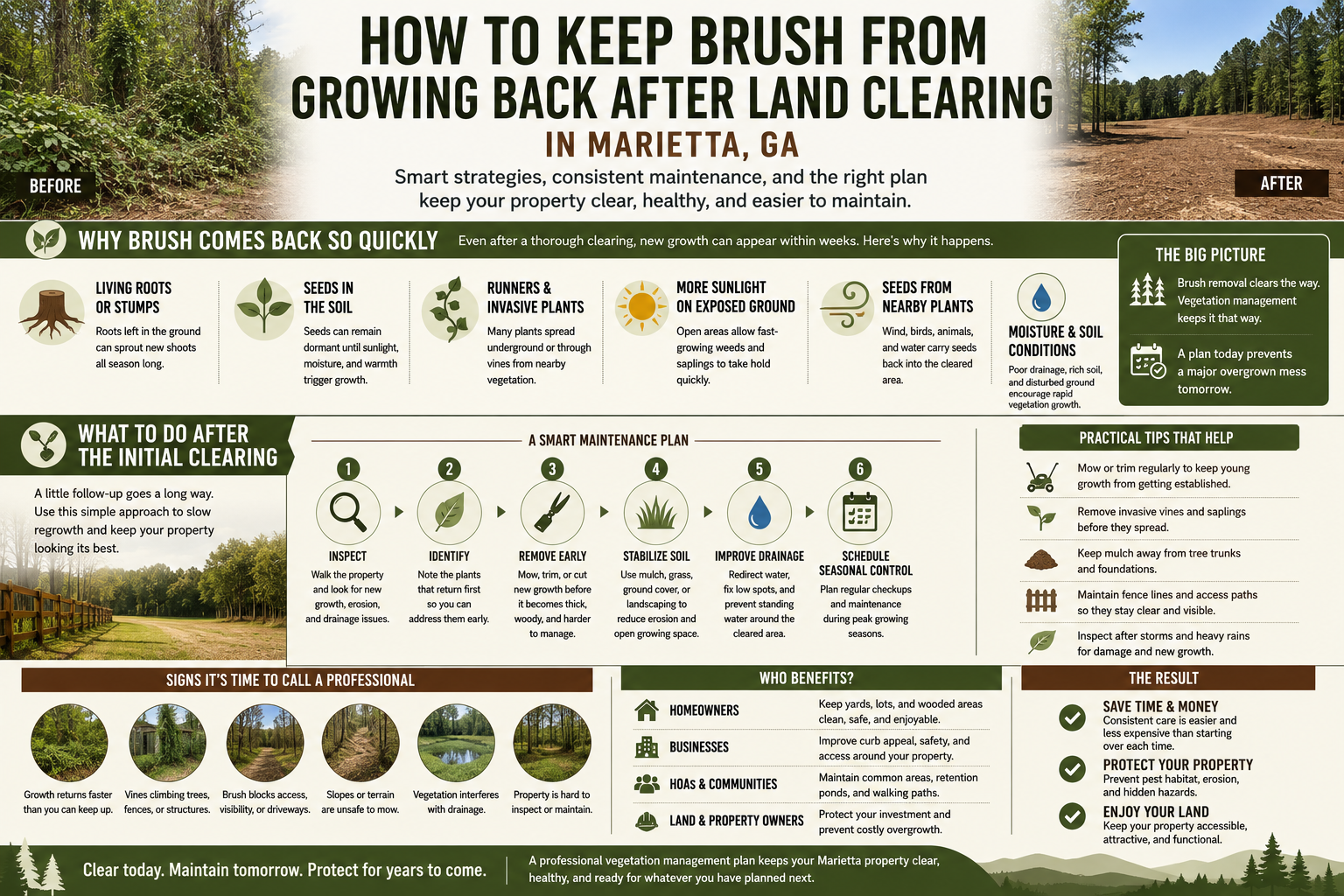
How to Keep Brush From Growing Back After Land Clearing in Marietta, GA

The body content of your post goes here. To edit this text, click on it and delete this default text and start typing your own or paste your own from a different source.
Clearing the Property Is Only the First Step
There is nothing quite like seeing an overgrown property after it has finally been cleared. Thick brush is gone, fence lines are visible again, access paths are open, and the entire area feels larger and easier to manage. For many property owners, that first cleanup creates an immediate sense of relief. The surprise often comes a few weeks or months later when vines, weeds, shoots, and young saplings begin appearing again.
Brush regrowth does not necessarily mean the original clearing work failed. In many cases, it is simply part of how aggressive vegetation responds after being cut back. Roots may still be alive below the surface, seeds may already be scattered throughout the soil, and nearby plants may continue sending new growth into the cleared area. Once sunlight reaches ground that was previously shaded, fast-growing weeds and invasive plants can take advantage of the open space.
For property owners in Marietta, GA, the growing conditions can make this process happen quickly. Warm temperatures, humidity, regular rainfall, and a long growing season give many types of vegetation plenty of time to establish and spread. A fence line that looks clean in early spring can become difficult to access again by late summer if new growth is not addressed.
That is why it helps to think of brush removal and vegetation management as two connected services. Brush removal handles the immediate overgrowth and restores access to the property. Vegetation management focuses on keeping the area controlled after the initial work is complete. Depending on the size, terrain, and intended use of the property, ongoing maintenance may be simple and occasional or more structured and seasonal.
Why Brush and Underbrush Grow Back
Different plants return in different ways. Some sprout directly from roots or stumps that remain in the ground. Others spread through underground runners that can produce new shoots several feet away from the original plant. Seeds may remain dormant in the soil until clearing creates better sunlight, moisture, or temperature conditions for germination.
Common reasons brush returns after land clearing include:
- Living roots or stumps remain below the surface. Cutting a plant at ground level does not always stop its root system from producing new shoots.
- Seeds are already present in the soil. Disturbed ground and increased sunlight can encourage dormant seeds to begin growing.
- Invasive plants spread through runners or vines. Some species can quickly move back into a cleared area from neighboring vegetation.
- Newly exposed ground receives more sunlight. Plants that could not compete in heavy shade may grow rapidly once the canopy or brush layer is opened.
- Nearby vegetation reseeds the property. Wind, birds, animals, and water can carry seeds into an area that has already been cleared.
- Drainage and soil conditions encourage growth. Moist low areas, disturbed soil, and nutrient-rich ground can support fast regrowth.
The type of regrowth also depends on what was removed. Soft weeds and annual plants may be easier to control through mowing or trimming. Woody vines, privet, saplings, and other established growth may return more aggressively because their root systems are already developed. Waiting until the new growth becomes thick and woody again can make the next cleanup more difficult.
The intended use of the area matters as well. A wooded lot that only needs a clear walking path will require a different maintenance approach than a backyard being prepared for grass, landscaping, a fence, or a future construction project. Commercial properties, HOA common areas, retention areas, and utility access routes may need regular visibility and access even if the space is not designed to look like a finished lawn.
Before deciding how to prevent brush from returning, property owners should identify the goal for the cleared land. Some areas need to remain open and closely maintained. Others only need enough control to prevent vines, saplings, and heavy underbrush from taking over again. Establishing that goal makes it easier to choose a realistic vegetation-management plan.
It is also important to inspect the property soon after clearing. New shoots are easier to identify and remove while they are small. Early inspection can reveal which plants are returning fastest, where water collects, and whether disturbed soil is beginning to erode. These observations can help property owners address the cause of repeated overgrowth instead of relying on another major cleanup every few years.
A one-time brush removal project can completely transform a property, but the best long-term results usually come from planning what happens next. With consistent monitoring and the right maintenance schedule, cleared areas can remain accessible, attractive, and far easier to manage.
What to Do After the Initial Clearing
The most effective way to slow brush regrowth depends on what the property owner wants to do with the land. There is no single solution that works for every backyard, wooded lot, fence line, commercial property, or retention area. A maintenance plan should reflect how often the area is used, how polished it needs to look, and how difficult the terrain is to access.
If the cleared area will become part of the lawn, regular mowing may be one of the simplest ways to keep new woody growth under control. Young shoots are much easier to cut before they develop thicker stems and deeper roots. Consistent mowing also reduces the chance that fast-growing weeds will produce seeds and spread across the area.
Not every property is suitable for mowing. Slopes, wooded sections, rocky ground, drainage channels, and uneven terrain may require trimming or selective vegetation removal instead. These areas should still be checked regularly so vines and saplings can be removed before they block access or become tangled around trees, fences, and structures.
Property owners should also pay close attention to invasive or aggressive plants. These species often grow faster than surrounding vegetation and may spread through roots, runners, seeds, or climbing vines. Removing new growth early is usually more manageable than waiting until it has formed another dense thicket.
Bare soil should not be ignored after clearing. When thick vegetation is removed, exposed ground may be vulnerable to erosion, weeds, and runoff. Depending on the site, mulch, grass, low-growing plants, or another planned ground cover may help stabilize the soil and reduce open space where unwanted growth can quickly return.
Build a Maintenance Plan Around the Property
A practical vegetation-management plan does not need to be complicated. It should simply create a consistent routine for inspecting the property and handling new growth before it becomes difficult. The exact schedule may vary by season because vegetation generally grows more quickly during warm, wet periods.
A basic maintenance sequence may include:
- Inspect the cleared area. Walk the property and look for new shoots, vines, drainage problems, erosion, and areas that are becoming difficult to access.
- Identify the fastest-returning vegetation. Note which plants are spreading aggressively so they can be addressed first.
- Remove new growth early. Mow, trim, or selectively clear new vegetation before it becomes thick or woody.
- Stabilize bare or disturbed soil. Use an appropriate ground cover, mulch, or landscaping plan to reduce erosion and open growing space.
- Correct drainage concerns. Address standing water, runoff, or erosion that may be encouraging unwanted growth or damaging the property.
- Schedule seasonal vegetation control. Plan follow-up service before the property returns to its original overgrown condition.
Drainage can play a larger role in vegetation growth than many property owners realize. Constantly damp ground may support dense weeds, vines, and moisture-loving plants. Runoff can also move seeds and organic material into low areas where brush repeatedly develops. Improving water flow may make the area easier to maintain while also protecting the soil from erosion.
The cleared area should also be reviewed for fallen limbs, hidden debris, old fencing, stumps, and uneven ground. Brush can conceal these hazards for years. Once the property is open, removing or marking them can make future mowing, trimming, and inspections safer.
Fence lines deserve particular attention because vines and saplings often grow directly through or beside the fence. Left unmanaged, they can place pressure on panels, bend wire fencing, trap moisture, and make repairs difficult. Keeping a narrow maintenance strip along the fence can improve visibility and reduce damage.
The same idea applies around buildings, sheds, parking areas, signage, utility equipment, and access roads. Vegetation should not be allowed to block visibility or prevent workers from reaching important parts of the property. Regular control can also make it easier to notice storm damage, erosion, drainage issues, or unauthorized dumping.
For homeowners planning to landscape the area, it is helpful to choose plants that fit the light, soil, and moisture conditions of the property. Desirable trees, shrubs, grasses, or ground covers can occupy space that might otherwise be taken over by weeds. However, landscaping should not be installed until major drainage, grading, or access concerns have been addressed.
The goal is not always to eliminate every natural plant. On many properties, the best approach is selective control. Healthy trees and appropriate native vegetation may remain while aggressive vines, invasive plants, dense underbrush, and unsafe growth are removed. This keeps the property manageable without making a wooded area look overly cleared.
Consistent maintenance is usually less disruptive and more efficient than allowing several growing seasons to pass between major cleanups. By removing small amounts of new growth at the right time, property owners can preserve the work completed during the original brush-clearing project.
Signs the Property Needs More Than Occasional Mowing
Some cleared areas can be maintained with a mower, trimmer, and occasional weekend cleanup. Other properties are too large, steep, wooded, wet, or heavily vegetated for that approach to be practical. When growth returns faster than the property owner can control it, professional vegetation management may be the safer and more effective option.
Specialized equipment can make a significant difference on land that is uneven or difficult to access. Thick vines, woody saplings, dense underbrush, and vegetation growing along slopes or drainage areas may be unsafe to handle with ordinary residential tools. Professional crews can evaluate the terrain, identify the appropriate equipment, and clear the area without forcing the property owner to work in hazardous conditions.
Vegetation management is useful for more than residential backyards. Commercial properties may need clear sightlines around entrances, parking areas, signs, and buildings. HOAs may need common areas, walking paths, retention areas, and property boundaries kept accessible. Vacant lots and undeveloped land may require periodic clearing so owners can inspect the property and identify dumping, erosion, storm damage, or unauthorized use.
Overgrowth can also interfere with fences, utilities, drainage systems, and access roads. Vines may climb poles and structures, while saplings can grow through fencing or close to foundations. Dense vegetation can hide damaged pipes, washed-out areas, fallen limbs, and other problems that should be addressed before they become more serious.
Property owners should consider professional vegetation management when they notice:
- Brush is returning faster than it can be mowed or trimmed.
- Vines are climbing trees, fences, utility equipment, or structures.
- Overgrowth is blocking access paths, driveways, signs, or property boundaries.
- Slopes, wet areas, or uneven terrain are unsafe to maintain with ordinary equipment.
- Vegetation is interfering with drainage channels or water flow.
- The property has become difficult to inspect for hazards or damage.
- Fence lines are becoming tangled or inaccessible.
- New saplings and woody growth are beginning to establish again.
Keep Your Marietta Property Clear and Manageable
A professional vegetation-management plan does not always mean frequent service throughout the year. Many properties can be maintained through seasonal visits timed around the strongest growth periods. The right schedule depends on the vegetation, property use, terrain, and appearance the owner wants to maintain.
For example, a residential property may need a spring cleanup followed by one or two inspections during the summer. A commercial property or HOA common area may require more regular service because access and appearance are ongoing concerns. A wooded lot may only need selective clearing to keep trails, boundaries, and drainage areas open.
The best plan should also consider what is growing on the property. Fast-growing vines and invasive plants may require closer monitoring than ordinary weeds. Young saplings should be addressed before their trunks become larger and their root systems become more established. Areas with repeated standing water or erosion may need drainage or grading improvements in addition to vegetation control.
Ongoing management can help protect the investment made in the original brush-removal project. It can also improve the way the property functions. Clear access makes it easier to maintain fences, inspect trees, reach utility areas, and respond to storm damage. Open sightlines can improve visibility around driveways, parking areas, and entrances.
Managing vegetation may also reduce areas where pests can hide. Dense brush can create sheltered spaces for insects, rodents, and other wildlife near buildings or frequently used areas. Keeping growth controlled does not eliminate every pest concern, but it makes the property easier to inspect and maintain.
Property owners should not wait until the land looks exactly as it did before the first clearing. New growth is usually easier to remove when stems are small, vines have not spread, and access remains open. Scheduling service earlier can reduce the amount of heavy work needed later.
Total Brush Removal provides brush removal, land clearing, property cleanup, and vegetation-management services for residential, commercial, and HOA properties in Marietta, GA, and surrounding Metro Atlanta communities. Service areas include Smyrna, Kennesaw, Acworth, Alpharetta, Roswell, Powder Springs, Woodstock, Atlanta, and other nearby locations.
Whether the property is a backyard, wooded lot, fence line, retention area, commercial site, or community common space, the goal is the same: keep the land accessible, visible, and easier to maintain. A customized plan can focus on the specific trouble areas without clearing more vegetation than necessary.
A successful land-clearing project should create more than a temporary improvement. With early follow-up, seasonal inspections, and targeted vegetation control, property owners can prevent brush from taking over again and avoid repeating the same large cleanup every few years.
If brush, vines, saplings, or undergrowth are beginning to return, contact Total Brush Removal for vegetation management and brush removal in Marietta, GA. The team can evaluate the property, identify the areas that need attention, and recommend a practical maintenance schedule based on the terrain, vegetation, and long-term goals for the land.
Brush Clearing & Property Restoration Insights!